








KNOWLEDGE VAULT
SPORTS - RUGBY

For lovers of Rugby betting, you're spoiled with two distinct versions of your favourite sport.
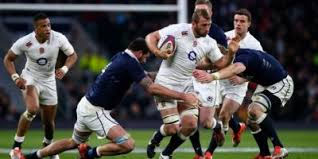
For the traditionalists, Rugby Union offers you the Aviva Championship, The Guinness Pro 14 as well as the international and European Tournaments and of course the Rugby World Cup.
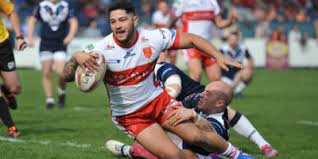
And for the breakaway fans, Rugby League brings the exciting Super League as well as the Challenge Cup tournament and the emerging NRL games from down under.
BETKINGS.UK will ensure the hottest news and information for all these games is brought to you the moment we hear, along with the best Rugby odds and deals available from the Online Bookmaker world.
80 minute match betting is the most popular, but you can even those odds out a little with handicap betting, points totals and margins, first try-scorer and a host of more specialised bets.
William Hill has a long tradition of offering special odds on Rugby League & Rugby Union and are amongst the most competitive out there for this great sport.



It all started....
How did the game of Rugby begin? The popular belief is that in 1823, a pupil at Rugby school in England, William Webb Ellis, picked up the ball and ran with it during a school soccer match. The problem with this belief is that soccer did not exist at that stage either. So how did the game come about! Rugby was just not born, it is a game that developed through the centuries, its origins can be traced back nearly two thousand years when China and Japan were playing an early form of the sport. The Greeks who were also very keen games players played a similar game. When the Romans conquered the Greeks, they brought back to Italy this game called ‘harpastum’, and the Romans then spread it throughout the western sector of their Empire. The French and Flemish nations took a particularly keen interest, but each country called the sport a different name.
In Britain, the Roman soldiers stationed there introduced the game to the locals, who called it football, although the spelling was somewhat different. There is mention of it as far back as 1175 in the book ‘History of London’, and in those days it was a contest between two villages. Up to two thousand people used to take part, there being no age restriction nor was it limited to the male population. There is evidence that matches took place between married woman and spinsters.
The teams would meet at noon at a point decided upon by the leaders of the two villages, usually a point midway between the two, and a ball would be thrown in the air. The object being to take the ball back to one’s own village where the goalposts were situated; these could be anything from a pool of water to the town square. The actual ball also varied from a piece of animal hide to a bundle of rags and signified either an item of warfare or of hunting. The most popular thought is that the ball represented an enemy King’s head or possibly that of an animal. The means of getting the ball back to the goals were not specified but carrying it, kicking it and hitting it with sticks and clubs were the most popular. Some of the players were on horseback whilst others, carried swords in addition to their clubs and staves. The field of play was not restricted in any way and normally was anywhere between the two villages - up and down the hills, across valleys, through the farming fields and across rivers. Many people were maimed for life, some killed and others drowned when the mob went through a river or stream. It was an ideal way of settling family and other feuds. In many cases a game took place within a game with ambushes being set to enable private duels to be settled. Play for the day was only abandoned at sunset.
When a village were successful in getting the ball back to their own goal they symbolically killed it. The usual method was by drowning in the village fountain or rubbing it into the dirt at the local market. Afterwards the ‘ball’ would be cut up and shared amongst the leaders. It is thought likely that the sporting terms we know as ‘dead ball’ and ‘killing the ball’ date from this time.
The effect that these games had on business and other national requirements was disastrous. Archery at that time was the backbone of Britains military success but the villagers were neglecting their responsibilities preferring to play ‘foote balle’. The result being that it was banned by Royal decree thirty one times in three hundred years by seven kings. In 1314 Edward II spoke out against the noise it created. Edward III blew the whistle because of the injuries caused to the yeomen of the realm, but the King who came on the heaviest of all was Henry VIII, a keen athlete in his youth until immobilised by ‘boozing, gluttony and womanising’. His 1531 Royal Decree spake ‘foote balle is nothing but beastly fury and extreme violence, whereof proceedeth hurte and consequently rancour and malice do remayne with thym that be wounded, wherefore it is to be put in perpetual silence’.
This did not stop the games popularity and it continued to flourish in its different forms. The damage done to villages and farms caused problems for the players with the landowners and the fact that matches were played on religious holidays and Sundays lost them the sympathy of the church. One of the most popular venues for many years was the match on Shrove Tuesday which was played in the town of Derby in the English Midlands and from it the modern sporting expression ‘local Derby’ is derived. The critical comment by the writers of the day on the sport also did not have any effect. Amongst their writings one finds the comments such as ‘rather be called a friendle kind of fyghte than a play or recreation’ and ‘a bloody and murthering practice’. Another writer wrote of foote balle ‘a devilish pastime and hereof groweth envy, rancour and malice, and sometimes brawling, murther, homicide and great effusion of blood, as experience daily teacheth’. Shakespeare even included comment on the sport in one of his plays when one of the characters commented ‘I shall not believe thee dead until I can play football with thy head’.
The coming of the Industrial revolution in Britain saw the change in occupation of the population from that of a rural community to that of an industrialised nation. The responsibility of holding down a job saw it change to a street game of catch, carry and scrag but it was beginning to die a slow but certain death. The public schools of England in the eighteenth and nineteenth centuries were responsible for the revival of the sport. When these schools were first started many were founded to take care of the education of the poor but by 1800 they had come a long way from their original foundations to that of the education of the sons of gentry. The standard of teaching however had not kept pace with the developments nor had the school conditions been improved. At Eton the boys slept five to a bed and were flogged for not smoking or drinking beer as this was thought to be the way of avoiding typhoid fever.
At nearly all the public schools the boys objected to being ordered around by socially inferior teachers and rebelled on a regular basis arming themselves with guns, swords and explosives. At two of the well known schools, Winchester and Rugby it was necessary to call in the army to restore peace. To help the boys release their aggressive tendencies several schools tried adapting the street game to school sports. Three schools persevered. They were to change the face of world sport. All three started with the same basic catch, carry and scrag traditional street game but two of the schools, Charterhouse and Westminster had hard quadrangles. Tackled participants got abrasions and broken limbs, so it was decided to leave the ball on the ground and just kick it. A fair question would be why did Rugby School stay with their modified version of the street game. Because they were the only school with big green open playing fields. It was playing surfaces not personal preference which dictated the evolution of the two games - rugby and soccer.
Rugby School also formulated and documented a set of rules. When William Webb Ellis was a pupil there if a player caught the ball directly from an opponents kick he was allowed to kick at goal. The opposition players were allowed to stand on the mark where the ball was caught and attempt to charge down the kicker. To gain space the catcher could run back to allow sufficient room before kicking; if the catcher wanted to go forward he could do so only as a follow up to his kick ahead. What Webb Ellis did was to add a new dimension to a handling game already in existence by picking up the ball and running forward with it in his hands. What was the reaction to Webb Ellis’s action? Nothing. It was written off as a typical ‘Ellis’ show-off. The game at that stage at Rugby School was dominated by forward play and being a back was a lonely occupation. The maul was the dominant feature even to the extent of spectators having their watches out to time the length of the scummage. The longer the better the game. The main idea was for a forward to gain possession by wedging the ball between his knees, and around him the forwards of both sides packed, still erect. Scrumming down was illegal and punishable with an uppercut.
The development of the game accelerated when the players left school and moved on to Universities thereafter forming clubs. In 1863 a meeting was held, attended by delegates from both schools and clubs to establish a uniform set of rules. This was achieved although it was a completely different game to what we know today. Teams consisted of twenty players a side, scoring was done soccer style, purely by goals, valued at a single point and most importantly hacking was allowed. The meeting formed the Football Association to govern the sport and it is this association, which based the game on the rules of the Cambridge University club, which led to the birth of soccer. It was not the handless game we know today.
Unity was not to last as disputes quickly arose regarding some of the rules, the main area of disagreement being whether to allow ‘hacking’ which the original meeting had wanted to exclude. In those days hacking was considered very manly and you were allowed to kick an opponent between the ankle and the knee provided it was face to face and that your opponent was not being held at the time. Another variation of hacking was called ‘Halleluja’. This happened after the game when players were paired off with opponents and lined up facing each other. When the whistle went they hacked away at each other until the referee called a halt. It was considered cowardly to retreat or flinch and in order to make hacking more effective players wore special boots with metal toe-caps. The proponents of the carrying code were adamant that this ‘art’ be allowed to continue as well as tripping, much to the disgust of the adherents of the kicking game. Area’s of common cause on both sides were that attempts to strangle or throttle players would not be allowed. Another issue that caused dissension was the matter of scoring and whether points should be allowed over the crossbar as well as under.
In 1871 it was the turn of the Blackheath club, which is still in existence, to call a meeting inviting all clubs who wanted to play the carrying game to join together to ensure that they were playing to the same rules. It had become obvious that the two games, carrying and kicking, had such radical differences that they could not go forward under the same banner. The adherents to the carrying code broke away from the Football Association and formed another body calling it a Union and embracing the rules applying to the game at Rugby School thereby giving the sport its present name. The union became the Rugby Football Union and the rules became the Laws. The clubs then found that their playing strength was continually being depleted by injuries through hacking and tripping, so much so, that these ‘arts’ were banned as well as that of bringing down a player with a lusty kick to the body which until then was an accepted form of tackling. These decisions created a storm of protest from the veterans of the day who were most indignant of the developments and flooded the letter pages of London’s leading newspaper ‘The Times’ denouncing the ‘milksops’ (effeminate fellows) who had succeeded in abolishing this practice.
Up until the introduction of these new laws the maul or scrummage had continued to be the cornerstone of the game taking up to twenty minutes for the ball to emerge from the scrum. There was resistance to letting the backs have the ball and their duties were to stop the opponents efforts to hack. They were to run with or kick the ball. At that time passing was not common and was considered a somewhat sharp practice. The new laws introduced a number of factors which changed the nature of the scrumming. First was the art of wheeling the scrum which reduced the pushing contest and made the skill of breaking away from the scrum and of dribbling the ball at the forward’s feet an important part of the game. Then came the emergence of the practice of heeling the ball back for the backs to use and finally a further change in the law which introduced the scrum at the place where any breach of the laws was not otherwise dealt with.
The new body was quick to organise the first International match, which took place within six months of formation of the Rugby Union. England played Scotland in Edinburgh. The difference in the approach to the game is highlighted by England having developed their backs and wanting to run the ball whilst Scotland strongly held the view that passing the ball out from the forwards was an act of cowardice. The Scots were crafty in their approach for when they laid out the field they restricted the width by nearly a third which put paid to the English idea of running the ball.
Within twenty five years after the formation of the Rugby Union radical developments had taken place in the style of play and there was a need to regularly update the laws. The game spread rapidly with separate controlling bodies being established in Scotland, Ireland, Wales, New Zealand, Queensland, New South Wales, Rhodesia and South Africa were seven provincial bodies had also been formed.
The first international matches in the United Kingdom were not without incident. Reverting to the England vs Scotland game at Edinburgh, the umpire, as the referee was then called, who was a local school teacher, awarded a try to the home side which was hotly disputed by the English visitors. When he later defended his actions in writing he said ‘I must say, however, that when an umpire is in doubt. I think he is justified in deciding against the side which makes the most noise’. By the end of the 1880’s none of the home unions would play against England as a result of dissatisfaction with the Rugby Football Union which the English controlled. It became necessary to refer the whole matter to the Lord Chief Justice of Scotland and to the President of the Rugby Football Union. The outcome of this development was the formation of a new body, the International Rugby Board, in 1890, which was to govern the game right throughout the world.
And now what of William Webb Ellis. It was nearly twenty years after his running the ball that anyone thought of limiting playing numbers in the game and it would take decades before anyone thought there was more to the game than just a forward push and shove. There is no record of him ever attending a rugby match. Why did he run the ball forward ? A contemporary assessment was that ‘he was someone who wants to be thought something of’. Another contemporary wrote ‘an admirable cricketer, but generally inclined to take unfair advantage at football’. Leaving Rugby School he went up to Oxford University where he obtained a cricketing ‘blue’ and then entered the church serving at one stage as the minister of St Clement Danes, of which the old nursery rhyme about oranges and lemons still survives. Little else is known of his life, he never married and died in 1872 and was buried in the South of France. He did have a sermon published but all tributes to him have been posthumous. Nobody bothered to find out where he was buried ... until 1959. Perhaps the biggest contribution that William Webb Ellis made towards the game of rugby was, for after the match, for he wrote and published a poem on beer!
Rugby Union separating from amateur to pro...
Rules on amateurism
The earliest strictures against professionalism came from the Yorkshire committee in 1879, when, in response to the influx of working class players and their expectations of payment following the start of the Yorkshire Cup in 1877, they adopted the MCC’s regulations on amateurism. These rules made it clear that a "gentleman” who found himself out of pocket could legitimately claim expenses 1. It is also worth noting that Yorkshire and Lancashire representatives formed the majority of the committee which drew up the RFU’s first amateurism rules in 1886.
Since many of the clubs in the North of England were either started by industrialists or well supported by them. Players were often allowed to leave work early on a Saturday to play without any deduction of pay. Inducements were made to players from other parts of the country to come and play for local teams. Furthermore, the huge match attendances and public support for the game in Lancashire and Yorkshire resulting in some local games getting audiences larger than Internationals held in London. All of this fueled what became know as "Veiled Professionalism".
In 1892/3 the leading gate taking clubs in the North formed leagues, they also operated a longer season, trained their players more thoroughly before key games by means of professional trainers and even introduced special diets for players. All of this was not viewed favorably by the more laid-back South and was seen as a pre-cursor to professionalism.
By 1893 reports of some players in the North of England receiving payments for playing were reaching the Rugby Union on a regular basis. One early incident of note was the professional of David and Evan James on March 29th, 1893. The brothers were both Welsh internationals and played for Broughton Rovers. Both were suspended from the union but the club went unpunished due to no evidence of its complicity.
The South were also not beyond reproach, also inducing players to come to clubs (Poaching) and the RFU itself turned a blind eye to evidence of professionalism when it suited it e.g. as stated by Collins 1, "it took no action whatsoever against the returning 1888 tourists, despite publicly available evidence that they were being paid, in order to protect Stoddart."
Although the North and South were often in dispute over other issues, they did appear to be united against professionalism in principle, so the idea of a North/South divide as the prime reason for the split appears to be inaccurate. The problem of how to define professionalism i.e. what was acceptable compensation and what not, indeed how to identify whether unacceptable practice had taken place at all.
Committee of enquiry
Following a complaint from the Cumberland County Union that another club had lured one of their players away with monetary incentives. The Union established a committee of enquiry consisting of F. I. Currey, W. Cail and A. M. Crook which attempted to obtain evidence. The rugby union was warned that if the club involved was punished, all the chief clubs in Lancashire and Yorkshire, from which a large proportion of international players were drawn, would secede from the Union.
The matter came to a head at a general meeting of the rugby union on September 20th, 1893 at the Westminster Palace Hotel. At that meeting a proposal was made by J. A. Millar, of Yorkshire County and seconded by M. Newsome, also of Yorkshire (both members of the RU committee) that "players be allowed compensation for bona fide loss of time". They explained that in an attempt to popularize the game they were introducing it to young working men, but that they did them an injustice due to lose of wages which they suffered in order to play for their county or club.
G. Rowland-Hill, Honorary secretary of the union since 81/82, was convinced that if this resolution were adopted it would lead to professionalism. Therefore this was opposed by him, supported by R. S. Whalley of Lancashire, a vice president, moved the following amendment: "that this meeting, believing that the above principle is contrary to the true interest of the game and its spirit, declines to sanction the same". This amendment was carried by 282 to 146 votes despite the Northerners traveling down to the meeting en mass in two special trains. H. E. Steed of Lennox F. C. had polled all the clubs in the union and had proxies for 120 clubs against professionalism.
The matter did not however end there and there was another general meeting held immediately afterwards where careful revisions were carefully prepared to crush and attempts to start professionalism in any form. By-law #1 for example was changed to declare that "the name of the society shall be called the 'Rugby Football Union' and only clubs comprised entirely of amateurs shall be eligible for membership, and its headquarters shall be London where all general meetings shall be held."
The issue of "broken time" payments then reached boiling point at the RFU's AGM. Hornby - a true amateur - argued for broken time payments because "the so-called amateur sides ask for large guarantees, publish no balance sheets and distribute expenses far larger than would be paid to a professional player".
Yorkshire complained that, although there are more rugby clubs in the North of England than in the South, more Southerners than Northerners populate the RFU Committee. Also, Committee meetings are held in London at times that are not suitable for Northern folk to attend.
A special general meeting was then held on December 28th, 1894 at the Canon street hotel, London which was called to answer the request from 20 clubs. This included:
Mr. J.A. Millerson of Yorkshire stated that the position of the Yorkshire clubs with regard to professionalism had been grossly misrepresented, and they had brought up their delegates to support the RU.
A resolution propsoed by Mr Cail and seconded by Rowland-Hill which amounted to a vote of confidence in the committee, which was duly carried.
A resolution proposed by Mr. Maud (Blackheath) and seconded by Mr. Carpmael (Barbarians) to offer a reward of 20/ to any person giving information that would lead to the conviction of a club of professionalism. This was defeated 258 to 168. More revisions were to be planned and implemented in 1895.
However, by the end of July 1895, Huddersfield, Batley, Dewsbury, Bradford, Manningham, Leeds, Halifax, Brighouse Rangers, Hull, Liversedge, Hunslet and Wakefield had announced their resignation from the Yorkshire Union. They were now rugby outcasts.
The Northern Union
On Tuesday, August 20, 1895, at a meeting at the Mitre Hotel, Leeds, the 12 clubs agreed they should form a Northern Union, but at the same time made it clear they wished to retain their links with the Yorkshire Union. It was decided that a five-man panel would meet a sub-committee of the Yorkshire Union to place before them a scheme for the settlement of the dispute.' The Union, however, immediately rejected the proposal.
The clubs decided to break all links with the union and to form the Northern Rugby Football Union NRFU (on amateur lines, but with the acceptance of the principle of payment for broken time). It was also agreed to hold a joint meeting of Yorkshire and Lancashire clubs at the George Hotel, Huddersfield on Thursday, August 29, when the formation of the NRFU could be officially announced.
The Huddersfield Examiner the following day stated: "On Thursday night, a meeting of the representatives of the Senior Clubs of Lancashire and Yorkshire was held at the George Hotel, Huddersfield, to consider the question of the formation of a northern Football Union. The meeting was held in private and lasted close on three hours. At the conclusion, representatives of the press were informed the following men had been present at the meeting: Mr H H Waller (Brighouse), Mr J Platt (Oldham), Mr J Nicholl (Halifax), Mr H Sewell (Leeds), Mr F Lister (Bradford), Mr C A Brewer (Hull), Mr J Clifford (Huddersfield), Mr J L Whittaker (Hunslet), Mr J H Fallas (Wakefield), Mr F Wright (Widnes), Mr E Gresty (Broughton Rangers), Mr J Goodall (Batley), Mr F Dennett (St Helens), Mr J Quirk (Leigh), Mr J Warren (Warrington), Mr G Taylor (Tyldesley), Mr E Wardle (Wigan), Mr A Fattorini (Manningham), Mr W Brierley (Rochdale Hornets), Mr J H Hampshire (Liversedge) and Mr C Holdsworth (Dewsbury). Mr Waller was elected to the chair and Mr Platt was elected secretary. The first resolution adopted was: "The clubs here represented decide to form a Northern Rugby Football Union, and pledge themselves to push forward without delay its establishment on the principle of payment for bona fide broken time only." So 22 of the leading clubs in Yorkshire and Lancashire met and formed the Northern Rugby Union (later to become known as Rugby League in 1922).
The 22 clubs had been formed some time previously e.g.: Batley 1880, Bradford 1863, Brighouse Rangers 1878, Broughton Rangers 1877, Dewsbury 1875, Halifax 1873, Huddersfield 1864, Hull 1865, Hunslet 1883, Leeds 1890, Leigh 1877, Liversedge 1877, Manningham 1876, Oldham 1876, Rochdale Hornets 1871, St Helens 1874, Tyldesley 1879, Wakefield Trinity 1873, Warrington 1875, Widnes 1875, Wigan 1879. Dewsbury withdrew a few days after the meeting and were replaced by Runcorn (1876). Stockport was also included at the meeting at the George after calling in by phone.
The first matches of the new Northern Union were played on September 7th, 1895: Huddersfield v. Batley, Wakefield v. Brighouse, Hunslet v. Liversedge, Runcord v. Manningham, Broughton Rangers v. Widnes, Stockport v. St. Helens, Halifax v. Oldham, Warrington v. Leigh, Bradford v. Rochdale Hornets, Wigan v. Tyldesley and Leeds v. Hull. Two competitions were to be fought for i.e. Lancashire (won for the first time by Runcord) and Yorkshire (won for the first time by Manningham - the Bradford club).
On September 19. 1895 at a general meeting of the RFU held at the Cannon Street hotel, further by-law changes were made to guard against professionalism which had been growing fast in the leagues of North England. Union clubs were forbidden to play Northern Union clubs and stricter rules against player payments were introduced:
A player could not remain on tour at the expense of the club after he had finished playing matches. There should be no giving or receiving money testimonials. Players should not receive any compensation for lost time due to training or expenses traveling to/from training.
Mr. Roland Hill stated that the committee had declared that the members of the Northern Union were under the Rugby Union rules, professionals. This ruling did not include members of clubs which belonged to the Northern union who by November 1st 1895 had resigned their membership of their club and reported same to their respective county committee.
It was a very bitter severance of rugby into two rival camps and acrimony continued for close to a century.
The Northern Union was a run-away success with 59 teams being present at the first AGM on August 27th, 1876 and many more applications flooding in.
In the 1896/7 season the Northern Union introduced a challenge cup with all teams allowed to enter which caused great excitement and the final was held on May 1st 1897 between Batley and St. Helens at Headingley. Batley won 10 - 3 watched by between 13,000 to 14,000 fans who paid 620 pounds between them.
From 1895 to 1908 the most significant changes to the rules were made and Rugby League was transformed into an entirely different and unique game.
These major differences were:
13 players per team as opposed to 15 in union (the two "missing" are the flankers)
The "play the ball" (heeling the ball back after a tackle) rather than a ruck
The elimination of the line-out
A slightly different scoring structure, with all goals only being worth 2 points
Why the split?
The battle within rugby was not based upon geographical lines i.e. some sort of a North v. South divide, but rather on class lines, focused on differing attitudes towards working class players by the administration of the game. In the industrial North of England many working class men started playing the game, especially mill workers and miners. The loss of earnings that such a worker experienced whilst playing rugby on a Saturday was considerable and so became a major inhibitor. The clubs began to make 'broken time' payments as compensation for the loss of income and many in the RFU (North and South) simply refused to accept the concept of broken time payments. In fact many of the Northern administrators were ex-public school and strongly defended amateurism too.
1895 was a split within Northern rugby, not simply between exclusively middle class clubs and open clubs but also within the clubs themselves: Castleford, Morley and Dewsbury to name three. Many other clubs which joined the Northern Union lost key administrators and players. If class had been the fuel which drove the exclusivity of Rugby i.e. to be the reserve of "gentlemen" to the exclusion of blue collar workers then the fact that after the split, the England Rugby Union team took nearly 18 years to regain the international championship title due to the absence of many of the best players must have widened and deepened the acrimony between the codes.
The real cause of the 1895 split appears to be how the administrators of the game handled the influx of working class players into the game during the 1870s and 80s. By not making provisions for them which would have allowed them to participate to the same level of the middle and upper classes, they established a situation which could only resolve itself with a split of the game into differing codes and a freeze on professionalism for Rugby Union which would last a hundred years.
Professionalism
It was the BBC's Rugby Union correspondent, Ian Robertson,who reporting on Radio Five Live that the International Rugby Football Union Board, meeting in Paris in late August 1995, had taken the historic decision to allow professionalism in the Union game. This decision came 99 years and 364 days after the 1895 decision to break away. The IRB did not really have a choice, with so much money beginning to flow into the game from advertising and TV coverage it was a complete injustice that the players themselves were not able to share in this bounty. In fact many of the top Union players were indeed getting their share and these underhand dealings became known as "Shamateurism" and an IRB working party reported that "breaches of the amateurism regulations were wholesale" in March 1995. So the August announcement was inevitable.
I do not regard the end of amateurism as a victory of Union over League, nor do I believe that this represented the end to 100 years of middle class oppression of the working man preventing him from participating in the game to keeping it for itself. After all, most clubs I know of have always consisted of a complete spectrum of people from all walks of life.
Rugby could and would have been a single code and it's only the fact that the officiators of the Union game staunchly stuck to the amateur ethos introduced in 1886, come what may that created and maintained the split. The labeling of the Northern clubs as rebels or splitters when they were really left with only one course of action open to them is an injustice which can never be undone.
It therefore seems to me that the blame, if blame has to be apportioned, needs to reside with the higher levels of Union administration who presided over the game for 100 years where little was done to improve the game in terms of coaching, spreading the game, encouraging competition, developing referees, allowing participants in the sport to profit from writing books, etc. and for what?, the principle of 'amateurism'. What seems to be forgotten is the fact that sports are usually amateur at a grass roots level and only in the upper levels of the game is the necessary sponsorship, TV broadcast money and attendance money available to provide player remuneration.
The Unions e.g. IRB, RFU, SRU, WRU and IRU etc. had a marvelous opportunity to introduce professionalism into the game in a controlled manner which could create a healthy environment in which the game could develop and expand but wasted this opportunity by fighting against the inevitable. Condemning the game into many years of wrangling to sort out the structure of Professionalism and how it interfaces with the rest of the game e.g. semi-professional, amateur and how the international game interfaces with the club game.
Once the announcement that professionalism was permissible had been made, the pressure has started building upon Rugby League since it is only played in certain countries and does not have anywhere the same depth in player numbers and clubs as Union.