








KNOWLEDGE VAULT
SPORTS - HORSE RACING

From the Cheltenham festival in the spring through to the Breeders Cup in late Autumn, BETKINGS.UK bring you the biggest, brightest and best Odds, Free Bets and Bonus Offers.
For horse racing lovers, every week see the most amazing and thrilling championship meetings and classic races including -
- The Grand National meeting at Liverpool in April
- The five classics - 1,000 & 2,000 Guineas at Newmarket in May; The Derby and Oaks at Epsom in June; The St Leger at Doncaster in September
- Royal Ascot in June
- Glorious Goodwood in July
- York in August
….the list goes on. William Hill have a competitive Ante-Post racing service and watch-out for their daily specials too.
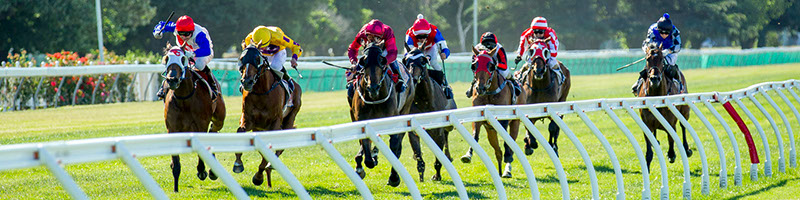



Horse racing is the second largest spectator sport in Great Britain, and one of the longest established, with a history dating back many centuries. It generates over £3.7 billion for the British economy, and the major horseracing events such as Royal Ascot and Cheltenham Festival are important dates in the British and international sporting and society calendar.
The sport has taken place in the country since Roman times and many of the sport's traditions and rules originated there. The Jockey Club, established in 1750, codified the Rules of Racing and one of its members, Admiral Rous laid the foundations of the handicapping system for horse racing, including the weight-for-age scale. Britain is also home to some of the world's iconic racecourses including Newmarket, Ascot and Cheltenham and many of the world's iconic races including The Derby at Epsom, The Grand National and Cheltenham Gold Cup. The UK has also produced some of the greatest jockeys, including Fred Archer, Sir Gordon Richards and Lester Piggott.
Britain has also historically been a hugely important centre for thoroughbred racehorse breeding. In fact all racehorses are called English Thoroughbred, the breed having been created in England. All modern thoroughbred racehorses can trace a line back to three foundation sires which were imported to Britain in the late 17th/early 18th centuries and the General Stud Book first published by James Weatherby still records details of every horse in the breed.
Britain has also historically been a hugely important centre for thoroughbred racehorse breeding. In fact all racehorses are called English Thoroughbred, the breed having been created in England. All modern thoroughbred racehorses can trace a line back to three foundation sires which were imported to Britain in the late 17th/early 18th centuries and the General Stud Book first published by James Weatherby still records details of every horse in the breed.
Gambling on horseraces has been one of the cornerstones of the British betting industry and the relationship between the two has historically been one of mutual dependence. The betting industry is an important funder of horse racing in Great Britain, through the betting levy administered by the Horserace Betting Levy Board and through media rights negotiated by racecourses and betting shops.
Types of racing
There are two main forms of horse racing in Great Britain.
Flat racing, which is run over distances between 5 furlongs and 2 miles 5 furlongs 159 yards on courses without obstacles.
National Hunt racing, races run over distances between 2 miles and 4 1/2 miles, where horses usually jump either hurdles or fences (races known as steeplechases). There is also a category of National Hunt races known as National Hunt flat races, which are run under National Hunt rules, but where no obstacles are jumped.
Collectively, the above racing is often referred to as racing "under rules", since there is another form of racing which is run on an altogether more informal and ad hoc basis, known as point-to-point racing. Point-to-point is a form of steeplechasing for amateur riders.
All the above forms of the sport are run under the auspices of the governing and regulatory body for horse-racing in Great Britain, the British Horseracing Authority with the exception of point-to-pointing which is administered by the Point-to-Point Authority with the BHA taking on regulatory functions. There is also a limited amount of harness racing which takes place under the auspices of the British Harness Racing Society and Arabian racing which takes place under the auspices of the Arabian Racing Organisation.
History
Roman era to Middle Ages
Horses were used as beasts of burden in pre-Roman times, but it is thought that the first horse races to take place in Britain were organised by Carl in Yorkshire around 200 AD. It is believed that Romans at the encampment at Wetherby matched horses against Arabian horses brought to England by Emperor Severus Septimus. The Venerable Bede reports that the English began to saddle their horses about the year 631.
The earliest written mention of 'running-horses' is a record of Hugh, from the French House of Capet, gifting some as a present to King Athelstan of England in the 9th/10th century. During Athelstan's reign a ban was placed on the export of English horses, such was supposed to be their superiority to continental ones. Continental ones were still permitted for import, and many were brought to England by William the Conqueror. Roger de Montgomerie, 1st Earl of Shrewsbury introduced Spanish stallions to the country.
The first recorded race meetings were during the reign of Henry II at Smithfield, London, during the annual St Bartholomew's horse fair. The event is attested by William Fitzstephen writing at some time after 1174 and the poet Drayton. The Middle English romance Sir Bevis of Hampton has couplets which refer to races taking place in the time of Richard I.
For the next three centuries there are numerous records of Kings of England keeping 'running horses'. Edward III bought horses at £13 6s 8d each, and was also gifted two by the King of Navarre. The royal stud continued to grow throughout the reign of Henry VII.
16th Century
Records become more substantial during the time of Henry VIII. He passed a number of laws relating to the breeding of horse and also imported a large number of stallions and mares for breeding. He kept a training establishment at Greenwich and a stud at Eltham.
Formal race meetings began to be instigated too. It is believed that the first occurrence of a trophy being presented to the winner of a race was in 1512 by organisers of a fair in Chester and was a small wooden ball decorated with flowers Meanwhile, the oldest horse race still in existence, the Kiplingcotes Derby was first run in 1519. The Carlisle Bells, reputedly the oldest sporting trophy in the world, were first competed for in the 16th century, in a race that still bears their name. One of the bells is inscribed "The sweftes horse thes bel tak" ("The swiftest horse takes this bell").
Racing was established at Chester, the oldest surviving racecourse in England, by 1540 In the 1580s Queen Elizabeth I is recorded as attending races on Salisbury Plain.. Leith Races were established by 1591, and at Doncaster by 1595.
17th century
During the reign of Elizabeth, interest in horse racing appears to have waned, for reasons unrecorded, although she is noted to have attended races on Salisbury Plain in the 1580s But this changed when in 1605, James I discovered the little village of Newmarket whilst out hawking or riding. He began to spend time there racing horses, and from then on it has been known as the home of horse racing in England. In fact, James spent so much time there that the House of Commons petitioned him to concentrate more of his time on running the country. The region has had a long association with horses going back to the time of Boudica and the Iceni. The first recorded race there was a match for £100 between horses owned by Lord Salisbury and Marquess of Buckingham in 1622, and the racecourse was founded in 1636.]
The first known Rules of Racing date from Kiplingcotes in 1619.
Race meetings began to spring up elsewhere in the country. Races were run for silver bells at Gatherley, Yorkshire, Croydon and Theobalds on Enfield Chase. Jockey weights began to be measured and rigorously enforced.
Around the time that Charles I of England came to the throne, Spring and Autumn race meetings were introduced to Newmarket and in 1634 the first Gold Cup event was held. All horse racing was then banned in 1654 by Oliver Cromwell, and many horses were requisitioned by the state. Despite this Cromwell himself kept a stud running of his own. With the restoration of Charles II racing flourished and he instituted the Newmarket Town Plate in 1664, writing the rules himself:
18th Century
In the early 18th century, Queen Anne kept a large string of horses and was instrumental in the founding of Royal Ascot where the opening race each year is still called the Queen Anne Stakes. The first published account of race results was John Cheney's Historical list of all the Horse Matches run, and all plates and prizes run for in England and Wales which dates to 1727 The Weatherby family succeeded Cheney as the keepers of the most complete set of racing records, and in a later work which came into their possession, published in York in 1748, the result is recorded of a race run in September 1709 on Clifton and Rawcliffe Ings, near York, for a gold cup of £50.
In 1740, Parliament introduced an act "to restrain and to prevent the excessive increase in horse racing"; this was largely ignored and in the 1750 the Jockey Club was formed to create and apply the Rules of Racing. However, until the 1760s, individual horses seldom ran more than five or six times, due to the scarcity of prizes on offer, but this began to change with major race meetings expanding the prizes on offer. Newmarket and York led the way in this.
Races were still generally for mature horses, and were typically run in matches, or in best-of-three heats over long distances. Three year old races were first run in 1731 and two year olds raced for the first time at Newmarket in 1769. In 1791, Cash became the first yearling to race, and beat a three year old in a match at Newmarket, in receipt of 3 stones. Interest in the sport was at a high throughout the 18th and 19th centuries. As Whyte's History of the English Turf noted in 1840, "For nearly a century and a half, the "Turf" has formed a favourite amusement of "Kings, Lords and Commons"] Or as Rice's History reported in 1879, "for some two hundred years the pursuit of Horse-racing has been attractive to more of our countrymen than any other out-door pastime".
At the end of the century the 12th Earl of Derby and Sir Charles Bunbury were key influencers in the sport. Under their auspices the Derby and Oaks were established at Epsom, inspired by the St Leger and the growing popularity of shorter races, for younger horses. These races, along with the Leger and the Guineas, became known as the Classics. The first handicap was run at Ascot in 1791.
At around the same time, jockeys began to earn a reputation in their own right, with early pioneers including Frank Buckle, Sam Chifney Sr and Jem Robinson.
19th century to modern day
Steeplechasing first became organised by Tom Colman at St Albans in the early 1830s. By the end of that decade, the Grand National had been established at Aintree by William Lynn.
In 1875, Sandown Park became the first racecourse to open a separate members' enclosure.
In 1947 Hamilton hosted the first evening race meeting in the UK. Now Wolverhampton Racecourse holds the most evening meetings, with nearly 50 a year.
The Jockey Club governed the sport until its governance role was handed to the British Horseracing Board, (formed in June 1993) and while the BHB became responsible for strategic planning, finance, politics, race planning, training and marketing, the Jockey Club continued to regulate the sport. In 2006 it formed the Horseracing Regulatory Authority to carry out the regulatory process whilst it focused on owning 13 racecourses and the gallops in Newmarket and Lambourn. In July 2007 the HRA merged with the BHB to form the British Horseracing Authority.
Betting
Wagering money on horse races is as old as the sport itself, but in the United Kingdom the links between horseracing and nationwide wagering are very strong. Betting shops are common sights in most towns, tending to be sited wherever a significant number of people with disposable cash can be expected. At one point in the 1970s it was said that the ideal location was "close to a pub, the Labour Exchange and the Post Office" the first being a source of customers in a good mood, the other two being sources of ready cash in the form of "the dole" and state pension money, which was dispensed through Post Offices at the time.
As early as 1938, £500,000,000 was being gambled on horse racing in England according to the Christian Social Council Committee on Gambling. However, betting shops were not legalised until 1960, at which time many of the famous British betting shop chains such as William Hill, Ladbrokes and Corals were legally established on the high street. Previously betting was either on course, via certain credit betting offices, or illegally conducted often in or around public houses, with 'bookies runners' ferrying the bets from bookmaker to client.
Betting is taxed under the authority of various acts of Parliament. A gross profit tax is levied on all UK based bookmakers which is payable to the exchequer, and a separate sum is agreed and collected by the Horserace Betting Levy Board, a non-departmental public body of the Department for Culture, Media and Sport, who use the funds for race prize money and the improvement of horseracing For the latest year reported, the levy resulted in £103.5 million being collected.
Member of Parliament Clement Freud, who himself had owned racehorses, alleged in an article published in the 1970s, before his election to Parliament, that horseracing was organized purely to generate taxes. He cited the large number of otherwise non-viable racecourses kept open (to ensure sufficient races being run) even as the financial rewards to the owners and trainers declined to the point where most could barely cover their expenses.
On 6 October 2001, the Government abolished the turnover-based tax on betting, which had been 9% of the stake or the winnings, the punter having the choice to pay a certain small amount or an uncertain large amount. The tax, now based on gross profit, is now effectively indirectly levied on the punters, the cost being absorbed in the odds that bookmakers offer.
The last 10 years in the UK has seen massive growth in online gambling. Punters are now going online to place their bets], where technology gives them access to a greater wealth of information and knowledge. Now racing punters exchange information on online forums, tipping sites etc.